 Episeed
The thinking behind Episeed
About Episeed
Why Episeed brings study, research notes and writing into a local-first desktop workspace, built and managed by Nikola Kozuljevic.

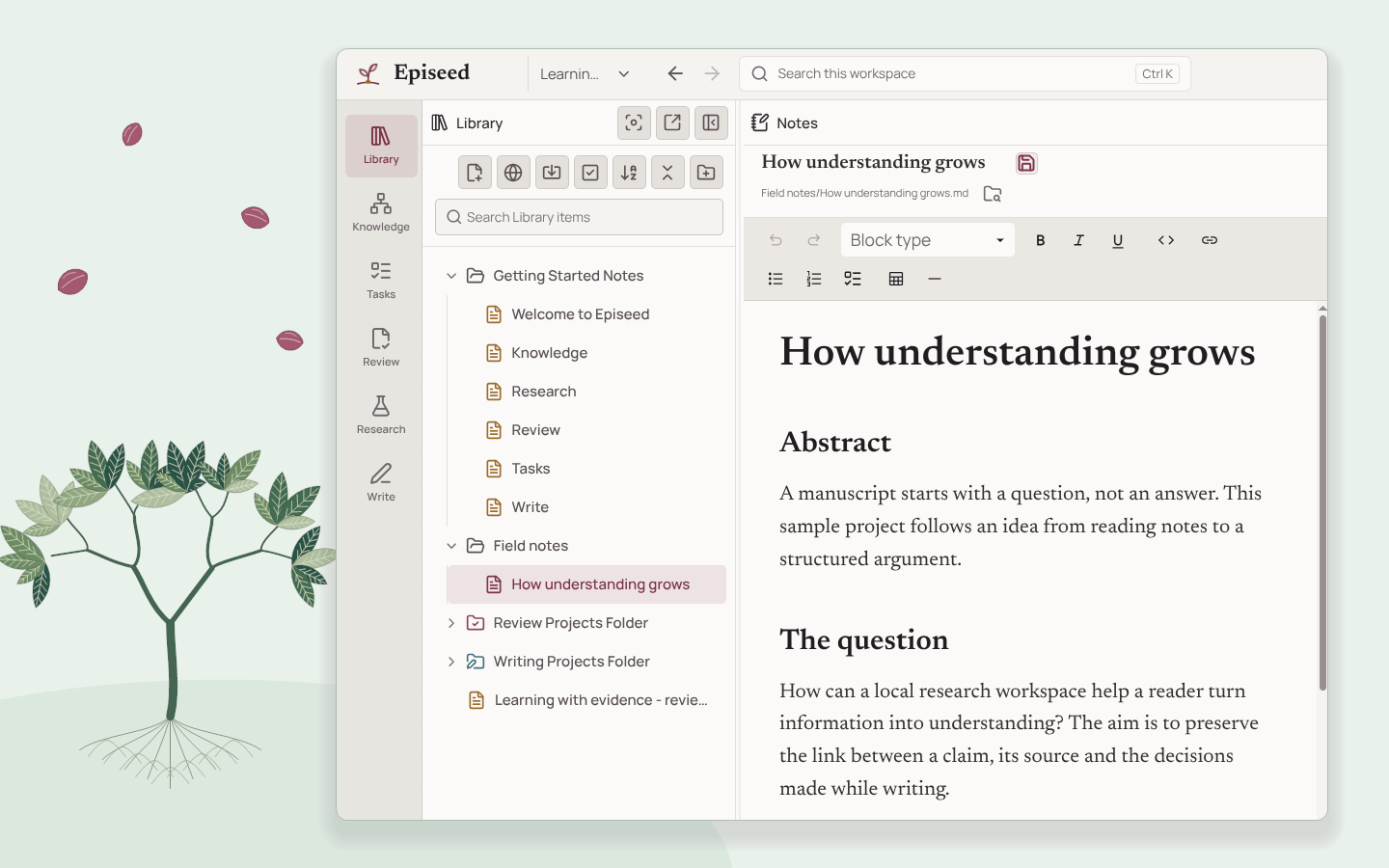
Episeed is a desktop workspace for study, research and writing. It brings sources, notes, connections, references and drafts together on your computer. You can use its core workflows without AI, choose a local model, or connect a cloud provider when that is useful to your work.
The aim is straightforward: spend less time moving material between tools, and more time understanding what you read and developing an argument of your own.
The name
Episeed joins epistēmē (ἐπιστήμη), the ancient Greek word for knowledge, with seed.
In Plato and Aristotle, epistēmē is knowledge you can give an account of: understanding that holds because you know the reasons for it. They set it against doxa, mere opinion. A quick answer is easy to repeat. Epistēmē takes the reading, the checking and the connecting.
The seed is where that starts. A question, a source or a single note is small, but it is enough to plant. What it grows into depends on the work you do with it.

Built around understanding
A quick answer is not always the same as learning. Research needs time with the source: checking a definition, noticing a limitation, comparing an explanation and deciding what the evidence supports.
Episeed is built around that work. Read a source, write a note in your own words, connect it to another idea and keep the next question close to the material that prompted it. Writing then becomes a continuation of your research rather than a separate collection of disconnected documents.
The guides explore practical ways to work like this, including literature review notes and choosing Markdown or LaTeX.
Local-first, not cloud-required
Your workspace lives in a folder on your computer. Core reading, note-taking, connections, tasks and writing do not require a hosted copy of your workspace.
Local-first is a design choice, not a promise that every optional feature is offline. Online discovery needs a connection. Cloud AI processes the context you approve sending. Managed services have their own registration and access requirements. See the local-first workspace features and privacy notice for those distinctions.
AI is optional
An assistant can help explain a passage, challenge an argument or suggest another direction. It should not be a condition of reading your notes or writing your paper.
Research findings, references and generated text still need checking against the original sources. Document changes are reviewed before they are applied. The decision about what belongs in your work remains yours.
Author
Episeed is built and managed by Nikola Kozuljevic, an independent developer based in Brno, Czech Republic. This site documents the product, shares practical workflows and records the thinking behind its development.
The blog carries product notes and updates. The features pages describe the workspace in more detail. Available platform downloads and release status are shown on the home page.
What this site does and does not host
This website provides product information, guides and release downloads. It does not host your research workspace or automatically upload your local files. Optional hosted search and AI services are separate from the desktop workspace.
The website currently has no analytics or tracking cookies. Hosting and update delivery still process technical request data. The privacy notice and terms explain the operational and legal details.



 Your work, on your desktop